
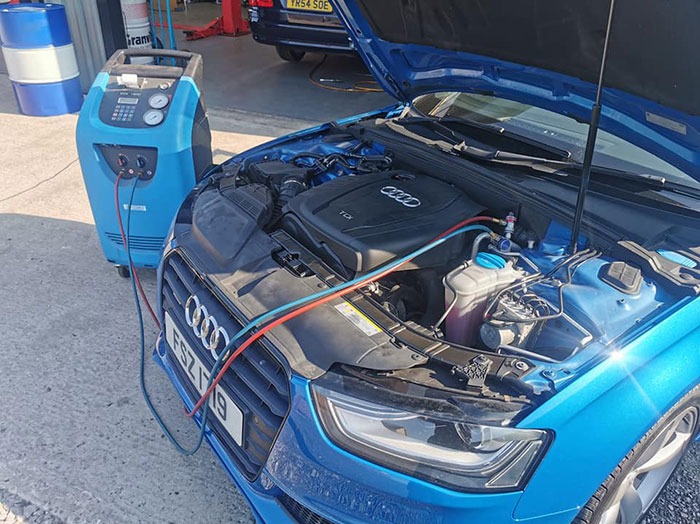
Air Conditioning
Air Conditioning Servicing & Regas in Portadown
Cold air back in the cabin — and a clear windscreen on damp Northern Ireland mornings
Work covered
Regas, leak checks, fault-finding
Refrigerants
R134a and R1234yf systems
VAG climate control
Climatronic faults read via ODIS
Overview
Air con regas, vacuum and leak checks, and climate control fault-finding for R134a and R1234yf systems.
Air conditioning is not only about summer. In a damp climate it is the quickest way to dry the air inside the car, which is why a working system clears a misted windscreen in seconds while a failed one leaves you wiping the glass with a sleeve.
Every system loses a little refrigerant each year through hoses, seals and the compressor shaft seal. As the charge drops, cooling fades gradually and the compressor works harder with less of the oil that travels around the system with the gas. Most drivers only notice once the air coming out is barely cooler than outside.
Mark starts by finding out why the system is not cooling. A regas puts the correct weight of refrigerant back in; if the system was empty, it is checked for leaks first so you are not paying to refill something that will be flat again in a few weeks.
Real workshop
10 Horseshoe Lane, Portadown


An air con check can be booked alongside a BG Products engine or automatic gearbox service at the same visit.
Warning signs
Is your car telling you something?
Tap a symptom to learn what it usually means.
Air only slightly cool
The most common sign of a low refrigerant charge. Cooling fades over months rather than stopping overnight.
What's included
What Mark checks and does
Every item is tailored to your vehicle. Anything extra is shown and explained before it is done — you stay in control of the bill.
How it works
From first call to collection
No surprises. You speak to the person doing the work, and nothing extra happens without your say-so.
07974 994225- 1
Discuss the symptoms and check the current vent temperature.
- 2
Confirm refrigerant type and charge weight for your vehicle.
- 3
Recover any refrigerant left in the system.
- 4
Vacuum test to confirm the system is sealed.
- 5
Recharge with the correct refrigerant and compressor oil.
- 6
Check compressor operation and vent temperature.
- 7
Explain any leak or fault found before further work is agreed.
In depth
What you should know about air conditioning
R134a or R1234yf — why it matters
Cars built before roughly 2017 mostly use R134a refrigerant. Newer models generally use R1234yf, which has a far lower environmental impact. The two are not interchangeable: they use different service connectors, different equipment and different oils, and mixing them is not permitted.
Your car's refrigerant type and the correct charge weight are printed on a label under the bonnet. That figure, not a guess, is what the system is filled to.
Why a regas is not always the answer
If a system has lost most of its charge in a short time, there is a leak. Common culprits are condensers damaged by stones at the front of the car, perished O-rings at pipe joints and worn compressor seals. Refilling without finding the leak just puts the problem off.
Holding a vacuum before recharging shows whether the system is sealed. Where a leak is found, you are told where it is and what a repair would involve before anything else is done.
Use it in winter too
Running the air conditioning for ten minutes or so every week, all year round, circulates the oil that keeps compressor seals supple. Systems left off for an entire winter are more likely to develop leaks and seized compressors.
Did you know?
Switching the A/C on with the heater set to warm is the fastest way to clear a misted windscreen. The system dries the air first, then the heater warms it.
On VW, Audi, ŠKODA & SEAT
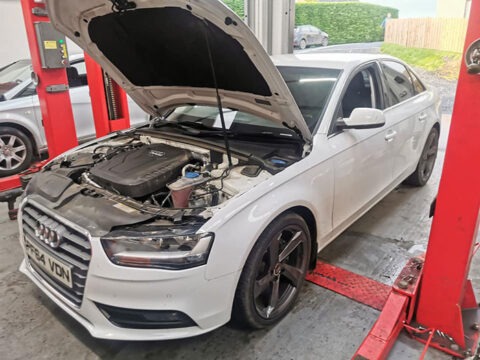
Many VW, Audi, ŠKODA and SEAT models use Climatronic automatic climate control and clutchless compressors governed by a regulating valve. When cooling fails, ODIS shows pressure sensor readings, compressor control values and flap motor positions, so Mark can tell a gas problem from an electrical one before anything is replaced.
- Climatronic and Climatic fault codes read and cleared through ODIS
- Flap motor basic settings run after battery disconnection or panel replacement
- Compressor regulating valve faults on clutchless VAG compressors diagnosed
- Air quality and temperature sensor values checked in live data
Every other make, too
Air conditioning checks and regassing for Ford, Vauxhall, Toyota, BMW, Mercedes-Benz, Hyundai, Kia, Nissan and other makes, using the refrigerant and oil each system is designed for.
FAQs
Common questions about air conditioning
Often booked alongside
Ready to Book?
Call Mark directly, or use the form to book an air con check — he'll get back to you.